Our history
Why was MAP founded?
The Sabra and Shatila Massacre
Following the Nakba (‘catastrophe’) of 1948, hundreds of thousands of Palestinians were forced or fled from their homes in historic Palestine due to violent attacks by militias during the creation of the state of Israel. Many sought refuge in what is now known as the occupied Palestinian territory, or in neighbouring countries, mainly Jordan, Syria, Egypt and Lebanon.
It was in two of these refugee camps in Beirut - Sabra and Shatila - that, between 16 and 18 September 1982, Lebanese Phalangist militants killed and injured hundreds of unarmed Palestinians and other civilians inside. The camp’s residents were defenceless.
The Israeli army, who had invaded Lebanon earlier that year and had surrounded the camp, had full knowledge of what was taking place inside, yet they never intervened. Instead, they illuminated the camp throughout the night with flares launched into the sky from helicopters and mortars.
Working in a hospital inside the camp at the time was a young orthopaedic surgeon from London, Dr Swee Chai Ang. Refusing to leave the hospital, Dr Ang worked tirelessly to save the injured and protect her patients during the massacre.
On her return to London, Dr Ang joined with fellow medical professionals and humanitarians to establish MAP, in order to send doctors and nurses to work in the Palestinian refugee camps and provide frontline care. This harrowing chapter in Palestinian history, helps explain why international medical solidarity was and still is so urgently needed.

How is MAP supporting Palestinians today?
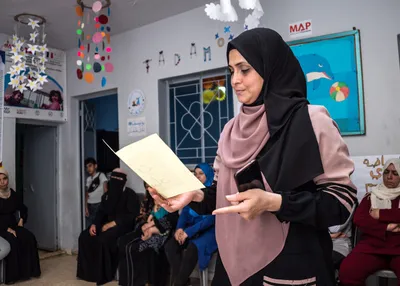
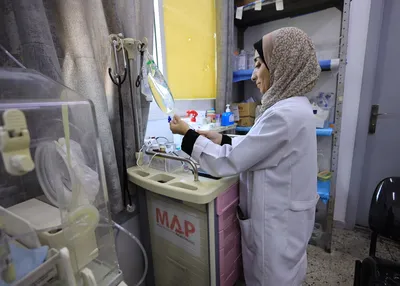
Since then, MAP has been working with Palestinian communities to deliver locally-led health and medical care to those worst affected by Israeli occupation, discrimination and oppression.
Today we have offices in the West Bank, Gaza, Jerusalem, Lebanon and London. With our extensive local knowledge and experience, we work closely with communities, hospitals, clinics and healthcare providers to coordinate care and medical aid even where there are severe restrictions on access.
Our teams provide immediate medical aid to those who need it at times of crisis and heightened violence, while also developing local capacity and skills to ensure the long-term development of the Palestinian healthcare system.
We are also committed to speaking out against injustices that prevent Palestinians from fully enjoying their rights to health and dignity. In doing so, we aim to shine a light on what is happening in Palestine and Lebanon today. By amplifying Palestinian voices and realities, we aim to ensure their experiences cannot be ignored and are heard at the highest levels.