The Sabra and Shatila massacre: Remembering the victims and survivors
Between 16 and 18 September 1982, hundreds of unarmed Palestinians and other civilians in Sabra and Shatila refugee camp in Beirut, were killed and injured by Lebanese Phalangist militants.

The Israeli army, who had invaded Lebanon earlier that year and had surrounded the camp, had full knowledge of what was taking place inside, yet never intervened. Instead, they illuminated the camp throughout the night using flares launched into the sky.
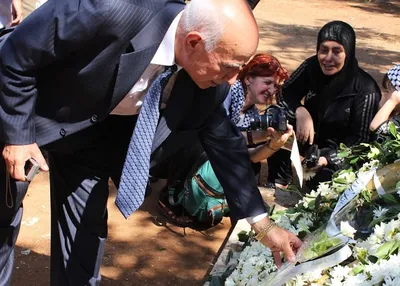
More than four decades on, none of the perpetrators of the massacre have been held accountable. Survivors remain psychologically scarred by what they witnessed, and the families of victims have never received justice.

"There are things that I can’t forget."
Among those at Sabra and Shatila during the massacre was Dr Swee Chai Ang, a British orthopaedic surgeon who had travelled to Lebanon to volunteer her medical skills. On 18 September, after 72 hours without rest, Dr Ang and her colleagues were forced out of the hospital at gunpoint. It was only once she was marched out of the camp that she understood the true scale of what had happened.
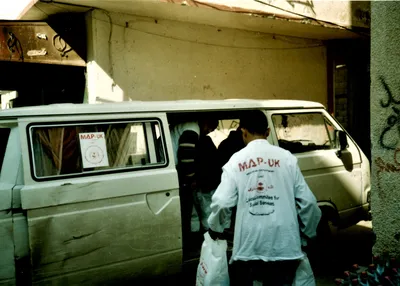
Dr Ang carried what she witnessed back to the UK with her. Unable to look away from what she'd seen, she joined together with fellow medics and humanitarians to establish Medical Aid for Palestinians (MAP), in order to send doctors and nurses to work in the Palestinian refugee camps and provide frontline care.
We commemorate the cruel injustice inflicted on Palestinians in the massacre in 1982, knowing that this is just one of the continuous assaults on Palestinians since 1948.
Dr Swee Chai Ang, a founding trustee of MAP and honorary patron

Dr Ang’s recounting of the tragedy
The Sabra and Shatila tragedy continues to cast a long shadow over the Palestinian people, and highlights the urgent need for Palestinian refugees in Lebanon to finally be granted their full rights to health and dignity.
During the Nakba (meaning “catastrophe” in Arabic) in 1947-48, 700,000 Palestinians were forced from or fled their homes at the hands of militias as the state of Israel was established on the land of historic Palestine. During this period, around 110,000 Palestinians fled to Lebanon with the belief that their displacement would be temporary. Generations later, their descendants are still waiting to realise their right of return.
Palestinian refugees in Lebanon continue to live in a state of permanent exile and humanitarian crisis, with some of the most severe restrictions imposed on any refugee population in the world. Discrimination and marginalisation further Palestinians’ lack of access to health, education, employment and social protection, leaving them perpetually dependent on assistance from the UN agency for Palestinian refugees (UNRWA) and other humanitarian organisations.

Wafa Dakwar, MAP’s Lebanon Director, said: “From the horrors of 1982 to the crises of today, MAP has remained steadfast in its commitment to providing vital healthcare to Palestinian refugees in need. Equally important is our long-standing dedication to speaking out in support of justice for Palestinians in Lebanon and across the region, whose rights have been denied for so long.”
Since March 2026, months of hostilities, forced displacement orders issued by the Israeli military and armed clashes have left communities across Lebanon in a near-constant state of upheaval. Ceasefires announced in November 2024, and again in 2026, have done little to bring the violence to an end.
For Palestinian refugees in Lebanon, the conflict has deepened already chronic vulnerabilities, adding pressure to communities that have long faced limited rights, resources, and access to life-saving services.
MAP's response in Lebanon
Since our founding more than 40 years ago, MAP continues to strive for a future where every Palestinian has an effective, sustainable and locally-led system of healthcare and the full realisation of their rights to health and dignity, including the right to return to their homeland, Palestine.
Today, that same commitment lives on in MAP's work across Lebanon's Palestinian refugee camps. Working with local partners, our projects include midwives supporting Palestinian mothers through pregnancy and birth, mental health and psychosocial support, child protection activities and specialised support for people with disabilities.
Together we must stand with all Palestinians, and help them build the brighter future they deserve.


Related content