Solidarity Polyclinic: Two years of healthcare in Gaza
1 October 2026

In October 2024, Medical Aid for Palestinians (MAP) opened the Solidarity Polyclinic in Deir al-Balah, central Gaza, in response to the huge numbers of Palestinians forced from their homes and sheltering in tents and makeshift camps, who needed care close to where they were living.
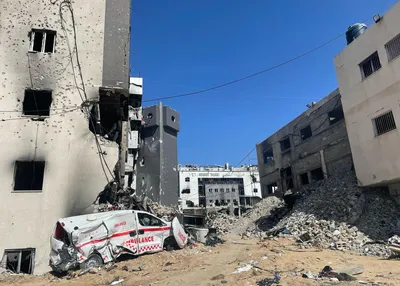
The health system in Gaza has been all but destroyed with no fully functioning hospitals left, and only 20 of 37 are partially functioning. Even where healthcare workers continue working, Israeli authorities’ ongoing aid restrictions mean severe shortages of medical supplies and equipment persist.
MAP’s Solidarity Polyclinic is one of the few remaining lifelines in a healthcare system systematically dismantled by the Israeli military, treating an average of 400-500 patients every day.
The Solidarity Polyclinic is an advanced medical point and a specialised care facility, designed to be accessible and meet diverse health needs. Its services include everything from emergency care to mental health support, nutrition and rehabilitation care, and more, all under one roof. In 2026 alone, the polyclinic has seen over 20,000 service users.
The wider picture: Healthcare in Gaza today

The so-called 'ceasefire' should have given people in Gaza the space to begin rebuilding permanent health facilities. Instead, the need for the polyclinic is as great as ever.
Since the 'ceasefire' agreement on 10 October 2025, Israeli forces have killed more than 1,400 Palestinians in Gaza, including at least 300 children, and injured more than 4,916, according to the Palestinian Ministry of Health (MoH). The true toll is likely higher, with some still trapped beneath the rubble.
For many, what is being lost during Israel's genocide will never be recovered. Over the past three years, tens of thousands of people have been left with life-changing injuries, a quarter of them children. Hundreds of thousands more are living with chronic diseases they cannot properly manage with essential facilities, equipment and medication all in critically short supply.
The people who keep Gaza's health system running have not been spared, with 56 attacks on healthcare this year alone. At least 1,700 healthcare workers have been killed since October 2023, and many of those who remain are working while displaced themselves, in clinics that have been repeatedly attacked and damaged.
Every loss means fewer hands for patients who need more care, not less.
The lack of access to essential medical supplies and specialist equipment presents another crisis in Gaza's health sector. Healthcare workers are left without the tools to treat their patients properly: there are no MRI services left in Gaza, and more than half of essential cancer medicines are out of stock (MoH).
The healthcare system remains heavily degraded, undersupplied and reliant on workarounds. Shortages absolutely continue and they are still costing patients timely access to lifesaving care.
Yousef Alasmar, MAP Medical Programmes Lead
For those whose needs can't be met in Gaza, leaving is the only option, yet more than 18,000 critical patients are still waiting for medical evacuation. More than 1,400 people have already died while waiting for medical evacuation reports the Ministry of Health.
The Solidarity Polyclinic: Serving the community

The staff at MAP’s Solidarity Polyclinic see, day by day, what living through years of genocide and displacement is doing to people's health and dignity.
“People are still living in some of the worst conditions imaginable: overcrowded displacement camps, tents packed tightly together, high humidity, sleeping on the ground, and limited access to many basic needs, most importantly water," Sobhi Awaja, MAP Rehabilitation Coordinator, tells us. "Naturally, we receive many cases directly linked to these living conditions."
Often, the root of the problem is not just medical, it is the very environment people are forced to live in.
Sobhi Awaja, MAP Rehabilitation Coordinator
Patients arrive with fractures, shrapnel wounds and amputations from the Israeli military attacks, needing physiotherapy, wound care and psychological support together, not as separate services, but as one continuous course of treatment.
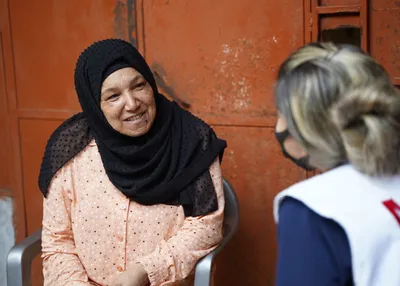
Zainab*, who came to the clinic after surviving shelling in Khan Younis with fractures in both legs, describes arriving unable to bear anyone touching her injuries. Now, after over a year of rehabilitation at the polyclinic, she can move around on her own with crutches.
"I do not come to the clinic only for rehabilitation," she told us. "It has also become a place where I can change my mood and escape, even for a little while. When I come here, I feel that I have a new hope for life."
Zainab is one of more than 64,000 people MAP has supported with rehabilitation services since the 'ceasefire', through hospital-based care and clinics like this one. Over the last three months alone, our polyclinic has delivered over 3,000 rehabilitation sessions.
Caring for others under the conditions of genocide takes a toll.
MAP's polyclinic staff work long hours with high patient numbers, while living through the constant risk of displacement, bombardment, and the loss of loved ones, which puts them at high risk of fatigue and burnout. To support the team, MAP's psychosocial support team runs fortnightly wellbeing sessions, giving staff a dedicated space to relieve stress, support one another and stay motivated.
But this is not enough. Healthcare workers in Gaza will only be safe and be able to rebuild their healthcare system when Israel's genocide ends.
Looking ahead: MAP's vision

Two years on, the Solidarity Polyclinic continues to offer what people need most: comprehensive, accessible care, delivered with dignity.
MAP’s vision is a future where all Palestinians can access an effective, sustainable and locally-led system of healthcare, and we will continue to work towards this despite Israel’s military occupation and genocide.

Stand with those giving everything for Palestinian health and dignity
*Names have been changed to protect people's identity