FACT SHEET - Six months of ‘ceasefire’ in Gaza - A ceasefire in name only
Since the 'ceasefire' agreement came into place in Gaza on 10 October 2025:
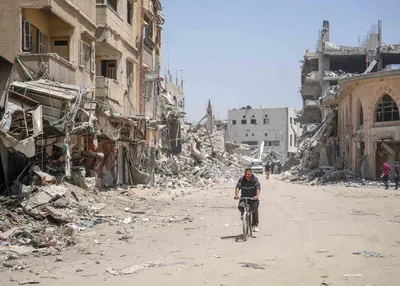
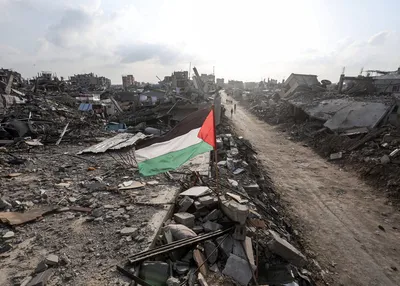
Israeli military attacks have continued against Palestinians:
- 730+ Palestinians have been killed in Gaza, including at least 120 children. (Palestinian Ministry of Health in Gaza (MoH)/ UNICEF)
- More than 2,000 Palestinians have been injured and transferred to hospitals (MoH)
- Four Palestinian healthcare workers have been killed. Paramedic, Hatem Ismail Rayyan, died in Israeli detention. (MoH)
- At least 309 healthcare workers have been detained by Israeli forces since October 2023, with many still arbitrarily detained, including Dr Hussam Abu Safiyeh, who UN experts say has reportedly been subjected to torture. (WHO / UN)
Healthcare services still face dangerous shortages due to lack of aid entry:
- As of 30 March there are no fully functional public hospitals in Gaza. Roughly half of all hospitals are not operational. (WHO)
- 53% of essential medicines and 67% of medical consumables are at zero-stock (MoH, Gaza Health Cluster on 16 March 2026)
- In primary healthcare, 64% of medications are unavailable, including a large proportion of drugs for non-communicable diseases, which remain a leading cause of mortality. (Gaza Health Cluster on 16 March 2026)
- Cancer services and chemotherapy availability are also critically affected, with 68% of chemotherapy drugs and 64% of cancer medications out of stock. This significantly impacts cancer care and survival rates. (MoH press release 4 Feb / Gaza Health Cluster on 16 March 2026)
- Around 70% of medical laboratories are no longer functioning due to shortages and 84% of laboratory reagents unavailable, (MoH, Gaza Health Cluster 16 March 2026).
- 90 hospital generators are now completely out of service; 38 continue to operate with critically limited fuel supplies; 11 require urgent maintenance, contingent upon the availability of essential spare parts. All remaining generators are at imminent risk of failure. (MoH press release 29 March)
- All hospitals in Gaza remain fully dependent on back-up generators with little fuel entering Gaza.
Restrictions on humanitarian aid organisations and aid entry continue:
- The number of humanitarian and commercial trucks entering Gaza saw a sharp decrease in March 2026 compared to the previous months, according to the World Food Programme (WFP report)
- A daily average of only 130 trucks entered in March (until the 30) compared to the daily average of 230 trucks entered during February and the 225 trucks per day during January. (WFP report)
- Between October 11 – March 29 an average of 245 trucks per day entered Gaza, this is below the number agreed upon on the terms of the ceasefire (600 trucks per day). (WFP)
- The number of trucks entering Gaza has fallen by 80% since the war against Iran began (28 Feb). (CMCC figure reported by Haaretz)
- As of 30 March, reports indicate that weekly commercial truck volumes were still at less than half their pre-escalation levels (UNOCHA)
- Since October 2025, over 30% of private sector truckloads collected into Gaza carried non-essential items instead of nutritious food or other critical supplies, based on reports (UNOCHA)
- Despite rising needs, many assistive devices for people with disabilities continue to be classified by the Israeli authorities as dual use items.
- 37 international organisations, including MAP, are facing deregistration by Israeli authorities and further restrictions on their operations in the occupied Palestinian territory.
Shortages of nutritious food and other humanitarian items persist:
- 50% of people surveyed in March indicated they could not afford basic food items despite price reductions since the ceasefire agreement. (WFP)
- MAP’s team continue to record significant levels of malnutrition, especially in children and pregnant and breastfeeding women.
- Since the beginning of 2026, healthcare workers at MAP's Solidarity Polyclinic in Deir al Balah have reported identifying between one and two cases of malnutrition among pregnant and breastfeeding women every day.
- 31,000 children are projected to suffer from severe acute malnutrition in 2026 (IPC Snapshot /Nutrition Cluster).
Medical evacuations continue to be denied and obstructed:
- More than 18,500 critical patients still need medical evacuation out of Gaza, including around 4,000 children. (WHO)
- Since October 2023 more than 1,400 patients have died due to lack of medical access to evacuations (MoH)
- Only 417 patients were evacuated in February and 82 in March (UNOCHA/Health Cluster)
- The World Health Organization suspended medical evacuations from Gaza to Egypt via the Rafah crossing on 7 April 2026 following the killing of a contractor in an Israeli military attack.
MAP’s response:
- Between October 2025 and March 2026, MAP supported over 450,480 primary healthcare consultations, reaching more than 112,000 people across Gaza.
For media inquiries or interviews with spokespeople, please contact:
Email: [email protected]
Phone: +44 (0) 203 869 1310