“Generations born outside Palestine still carry its memory in their hearts.” – 78 years of ongoing Nakba
27 May 2026

During the Nakba in 1947-48, at least 750,000 Palestinians were forced from their homes by militias as the state of Israel was established on the land of historic Palestine. During this period, around 110,000 Palestinians fled to Lebanon with the belief that their displacement would be temporary. 78 years later, their descendants are still waiting to return.
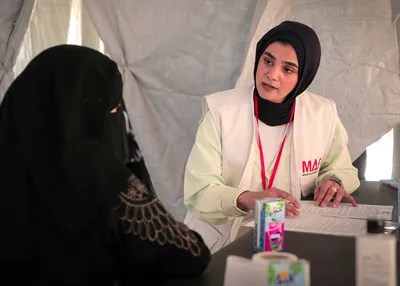
Palestinians in Lebanon have faced some of the most severe restrictions imposed on any refugee population in the world; legally barred from over 30 professions, prohibited from owning property and denied basic civil rights – including access to healthcare by the Lebanese government.
In March 2026, Israeli forced displacement orders and military strikes once again affected Palestinian refugee communities across Lebanon, echoing with devastating familiarity the events of 1947-48. A ceasefire came into effect in April 2026, yet Israeli air strikes and ground operations in Lebanon continue.
For Palestinians, the Nakba was never a single event. It is an ongoing catastrophe inherited across generations. In this series, MAP colleagues from Gaza, the West Bank, Lebanon, and the UK share what it means to carry this catastrophe, not only as legacy, but as lived reality.
We continue in Lebanon.
“A story from a refugee”
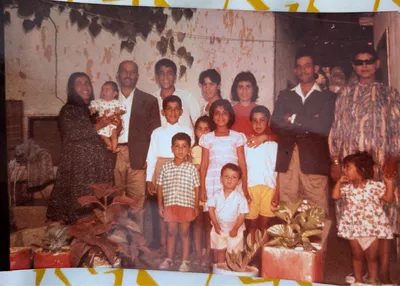
My father always spoke in a loud voice about Palestine with deep love.
He described our village as peaceful and beautiful, surrounded by large farming lands that my grandfather owned. He used to say that their home was simple, but full of warmth, dignity, and life.
Although I never saw Palestine myself, I grew up listening to these stories, and they created in me a strong, emotional connection to my homeland.


My family is originally from Al-Damoun village near Acre in historic Palestine.
During the Nakba in 1948, my grandfather and his family were forced to leave their home when my father was only five years old.
Like many Palestinian families, they believed that they would return after a short time, so they left everything behind. Their home, their land and all the memories connected to it.
During the journey of displacement, diseases spread among the refugees on the road. My father became seriously ill, and his two sisters died during that difficult period. My grandfather believed that my father would also not survive and felt helpless.
My eldest uncle, who was only 13 years old at the time, refused to leave him behind. He carried my father on his shoulders and continued walking for long distances until they finally reached Al-Kazkhani area, known today as Mina Road in Lebanon.
As a Palestinian, I still feel proud whenever I introduce myself as a Palestinian from Al-Damoun. Up to today, we continue teaching our children about their roots and history.
Generations born outside Palestine still carry its memory in their hearts.
“Losing an entire homeland”
As Palestinians, many of us still carry a constant feeling of exile and instability, as if we do not completely belong anywhere. Leaving a house is painful. Losing an entire homeland is indescribable.
I personally experienced a similar feeling during the 2007 Nahr El-Bared war in Lebanon, when my family and I were forced to leave our home and move to another camp.
We had to leave all our memories behind us, even our Palestine house key. That experience helped me understand more deeply the fear, pain and uncertainty that my grandparents experienced during the Nakba.

Palestinians have always found ways to remain connected to their homeland and preserve their identity through generations. For many, education became a form of strength, a way to remain aware and better able to defend our rights and our future.
Having large families also became a form of resistance to preserve Palestinian presence and identity through generations. My father strongly believed in this and eventually became the father of 14 sons and daughters.
"Only a dream”
Often, we wish that everything we are living through is only a dream. That one day, we will wake up and find ourselves back in our homeland. Planting olive trees, walking freely in our villages, and swimming in the sea of Acre once again.
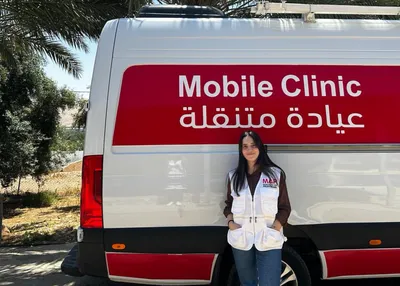
Maybe I would go to my work at MAP (the same organisation but for different support causes) with my colleagues, and finally able to live and work with dignity in our homeland instead of as refugees. Maybe I’d feel stable, belonging, and hope – with no need for emergency support.
For me, the Nakba is not only a historical event from the past. It is a continuing story that lives within Palestinian families across generations.
Yet, despite all the suffering, it has also taught us resilience, patience, and the importance of preserving our identity, memories, and connection to Palestine.
Related content