“The same story repeating itself” - 78 years of ongoing Nakba
14 July 2026

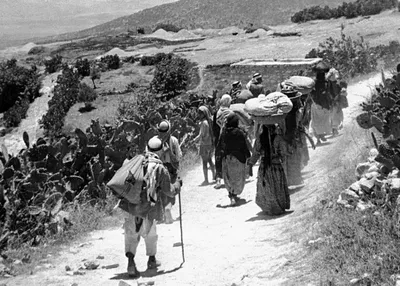
The forced displacement of Palestinians never ended in 1948.
In the West Bank, more than 3,200 Palestinians have been displaced due to settler attacks, related access restrictions, and demolitions for lacking Israeli-issued building permits in 2026 alone.
Israeli military operations in the northern West Bank have forcibly displaced at least 40,000 Palestinians from Jenin, Tulkarem and nearby refugee camps since the launch of their ‘Operation Iron Wall’ in January 2025, in what UN and human rights organizations describe as the largest mass displacement in the West Bank since 1967.
The story of the Nakba is not just history; it is an ongoing catastrophe that is carried, inherited and a repeating cycle. In this series, MAP colleagues from Gaza, the occupied West Bank, Lebanon, and the UK share what it means to carry this catastrophe, not only as legacy, but as lived reality.
We continue in the West Bank, with Taline.

“Classified as refugees within our own homeland.”
“I was not with them”
I was born in Jerusalem, and I’ve lived in Ramallah for most of my life.
When I was 14, my father became the Palestinian ambassador to Greece and we all moved there, which had a real impact on my sense of identity. Adolescence is an important stage for Palestinians in forming their sense of belonging, when one’s attachment to their homeland develops.
I would hear about people my age going to protests and so on, but I was living far from home, in a world that had nothing to do with Palestine.
I remember the story of Nadim Nuwarra, a teenage school student who was killed by the Israeli military. Losing him marked our whole community, but he was only one of so many.
So many of us grew up losing classmates, friends, and family, before we were even adults. That kind of loss, at that age, becomes part of how you understand your own identity, and where your resistance and resilience come from.
When people asked me where I was from, I would say Palestine. But the world didn't really know much about Palestine or Gaza 10 years ago, so I would have to explain what and where Palestine is. I always felt a kind of… not hesitation exactly, but maybe anger. Anger at the violent occupation that made Palestinians have to protect and explain our identity.
It made me feel very uncomfortable when I had to refer to Israel just to help people understand where Palestine was. That really hurt. But I was always proud of my Palestinian identity.
Later, when the Israeli military launched the 2021 offensive on Gaza, I was at university abroad. I was constantly afraid, constantly tense, not knowing what was happening in my country. My family were there, my friends were there, but I was not with them.
“Reconnecting with Palestinian culture”
When I returned to Palestine in 2022, I started to reintegrate into my Palestinian identity. I began engaging more and staying updated with the news, and I developed a strong desire to help.
I started reconnecting with Palestinian culture, not as something abstract, but as something lived in every place we went. From villages to refugee camps, I realised that while each place felt like its own world, the same reality ran through them all. Different names, different streets, but the same pressures, the same constraints, the same sense of control by the occupation.

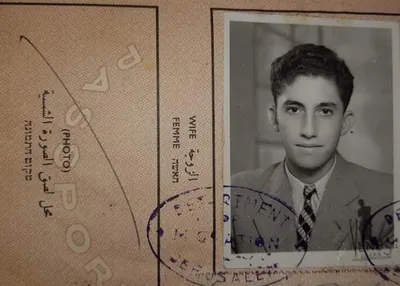
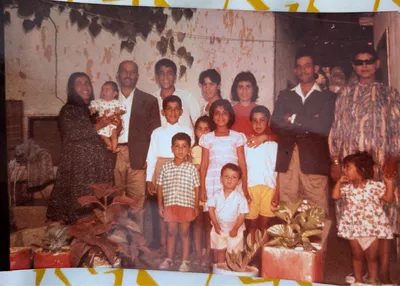
That experience solidified who I am. Whenever someone asks where I am from now, I say Jaffa. Even though I wasn’t born there, and even my father wasn’t born there, we all consider ourselves from Jaffa, without exception. We were raised on stories of Jaffa, on memories passed down from my grandfather.
And there are things from our family history that I’m still learning. I had never heard my father’s story about my great-grandfather, Dr Mikhael, for example. Hearing him describe how they returned to the house in Jaffa and found a settler inside... I couldn’t hold it in. Even now, talking about it, I feel tears coming.
It is, honestly, the deepest injustice that this happens to us. That we are dispossessed of our homeland, and that even our own stories can get lost before they reach us.
In my field work today, I see the same scenes as before in different forms: settlers, displacement, military pressure, families unsure where they will end up next. It feels as if nothing has changed. As if the same story is repeating itself in different places, with different names, but the same lived reality for Palestinians everywhere.
Even though I was born in Jerusalem and live in Ramallah, I still feel displaced because Jaffa is my home. I consider myself a refugee.
Note: Under UNRWA's working definition, Palestinian refugees are those who lived in historic Palestine and lost their homes and livelihoods as a result of the 1948 conflict—a definition that also extends to their descendants. For many Palestinians, displacement is felt and understood as an inherited, personal reality regardless of formal category.
“It will be our turn next”
My mother always says, “No matter what happens, I will not leave the country, I will not leave my home.” My father doesn’t like speaking about the future.
I think every Palestinian thinks about displacement. When Israel’s genocide in Gaza began, there was a lot of talk that “it will be our turn next”. We can never be sure what might happen, the Israeli army could storm any city at any moment. The feeling is always present.
But I’ve found myself in being here, in this country. My work has allowed me to truly see how so many Palestinians live; how they’re being displaced, how their children are being arrested or killed.
I feel that my purpose is to give, to remain in this humanitarian field, and to help. So I’ll say it again: if there were ever a danger that we would be displaced, I would stay.

Palestine is a very educated society. We are a deeply creative people, with so much potential and capacity for life. Our empathy, our sense of connection, our belonging to the land, to our homeland, and to our people – our whole perspective is shaped by our identity.
We have knowledge, literature, science and culture. That foundation existed long before any of this began.
Living under occupation has forced a strong attachment to life, a sense of purpose, that comes from constantly having to hold on to what's ours. But that isn't something the occupation gave us – it’s something we built in spite of it.
Yet, we have been deprived of so many opportunities. There are so many things we have been denied; careers we couldn’t pursue, paths we couldn’t take, freedoms that were never available to us.
If all our creativity and intellectual life had been allowed to develop without occupation, there’s no telling how much we would have flourished.

The UK must ban settlement trade
Related content