“Looking for Palestine” - 78 years of ongoing Nakba
5 June 2026

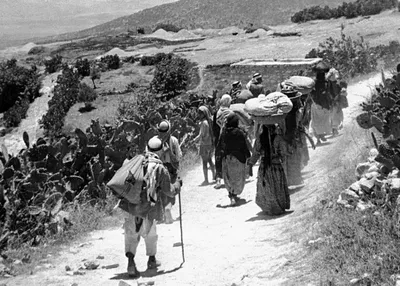
The Nakba is not only marked by the catastrophic displacement of more than 750,000 people in 1947-48, but also by the countless more that followed. Families have been scattered across the Arab world and far beyond, and today, more than half of all Palestinians live in the diaspora. Many of them are still waiting in camps for their right of return, enshrined in international law but never fulfilled.
For many in the diaspora, the Nakba did not only rob families of land and property. It robbed them of language, lineage, dignity, representation, memories, and of truly knowing where they come from. The attempted erasure of Palestinian identity - through the destruction of villages, the denial of the right of return, and decades of displacement, has left generations of Palestinians navigating who they are. Across borders and between worlds.
In this series, MAP colleagues from Gaza, the West Bank, Lebanon, and the UK share what it means to carry this catastrophe, not only as legacy, but as lived reality.
We continue in the UK, with Zahra.
The tree and green beans
My family, both on my paternal and maternal side, are from Tiberias in north Palestine.
My father was from a village called Al-Shajara, which means the tree. My mum was from a village called Lubia, which means green beans. The two villages were only half an hour walk from each other. My grandmothers were friends. They used to walk and visit each other, long before everything changed.
During the Nakba, my family fled. My mum would have been no older than a year old, and my father, no older than three. My mum was carried by the eldest, my uncle, on the journey. He would have been about eighteen years old at the time.
They fled to south Lebanon and lived in a camp called Ein el-Hilweh. My grandad chose that location because it was close to Palestine.
We don't want to go too far because we're going to have to go back. So let's stop here.
Zahra's grandad; Hafez, Abu Fawwaz, on why he chose Ein el-Hilweh camp.
Both my mum's family and my dad's family were raised in that camp. That's where my parents got married.
My grandad became close friends with an American guy at the golf course he worked at. This man would always say to him: “Abu Fawwaz, you need to take your family and leave. Come to America.” And my grandad would say: “No, we're going home.” And the man would reply: “Abu Fawwaz, Palestine's gone. You're not going back.”
The golf course closed, and the Americans left after the 1967 war.
My grandparents lived on Jabal Al Halib, ‘Milk Mountain’, in Ein el-Hilweh. It's quite high up in the camp, and from there you get a whole view of the camp and beyond. My grandad used to sit on his balcony up there for hours and hours. I'd say to him: “Jiddo, what are you looking at?” And he would say: “I'm looking at Palestine.”

All my grandparents passed away in that camp. They died waiting to go back.
Between two worlds
My parents had six children in the camp. I was the last. We left Ein el-Hilweh in 1993, came to the UK, claimed asylum, and eventually got refugee status then British citizenship. I was five years old when we left.
My earliest memory is our first night in London. I remember absolutely nothing before that.
I don't feel displaced. London is the only home I've ever known. I'm a British citizen. I have all the freedoms in the world. The only time I have honestly felt displaced is when I returned to the camp in Lebanon. You feel absolutely suffocated.
I went there year after year, and seeing my cousins become more and more disenfranchised and depressed, you just think: 'What is the point?'
They can't own property outside the camps. They can't build outside the camps. They can't do certain jobs. They never get citizenship. They just live in this perpetual state of exile. And that is really depressing.
Zahra, on her cousins situation in the camp in Lebanon.
Growing up, I would never say to people that I was Palestinian, because I never felt I had a right to. I would say I was born in Lebanon, but my family are Palestinian. I wouldn’t refer to myself as Lebanese either, because it was always made very clear that Lebanon did not want the Palestinian refugees there. My family would always say: “No, this isn't your home. Palestine is your home.”
I didn't really connect with that until I went to Palestine for the very first time when I turned thirty. It was a completely life-changing experience. I remember people saying to me: “Where are you from?” And for the first time in my life, I could say: “I'm from here.” And everyone would say: “Welcome home.”
That was the loveliest experience of my life. The smells, the colours. I always imagined that because Lebanon and Palestine were so close to each other, it probably looked just like Lebanon. I couldn't have been more wrong.
My parents went back to Palestine for the very first time when they turned seventy. Both of their villages had been destroyed. The house my father was born in, in Tiberias city, still stands. That was really emotional for him.
I've always had this dream that one day we'll be able to buy that house back, so that they can live out the rest of their lives there.
What the Nakba robbed
The Nakba robbed my family of time, history, lineage, and stories. My grandparents left with nothing but the clothes on their backs and their children.

My mum doesn’t even know when her birthday is. My grandmother didn't take any birth certificates with her, she had 12 children and no one could remember.
I don't have any pictures of my family in Palestine because they didn't take any pictures with them. I don't know what my grandparents' house looked like. I don't know what the villages looked like, what they smelled like, what colours they were. So much of my family history has just been completely robbed.
I think that really affected me growing up, in ways I didn't realise until I got older. This sense of not quite knowing who I truly was.
It robbed me of time with my grandparents and extended family. I don't know them well because I haven't spent that much time with them. I spent summers with them as a child, but that was it. I wish I'd seen them happier.
If the Nakba hadn't happened, I like to think I would have ended up in the UK anyway, it's my home. But we'd have spent summers in the family village, in my grandparents' home. They would have shown me the trees they planted, the animals they raised, the food they grew. I would have spoken my mother tongue better. I would have known who they were. And I think, by knowing who they were, I would have known who I was.
I was very much one of the lucky ones. My cousins are still in the camps. I haven't been back since I was nineteen. I can't face it. You feel guilty if you do, and guilty if you don't.
The UK is my home. I'm British, as South London as you get. But Palestine is also who I am, it is in my blood and no one can take that away from me. I feel that now.
Zahra, on her identity.
And we’ll return again. Not if, but when.
Related content